
Leaking joints and stop ends
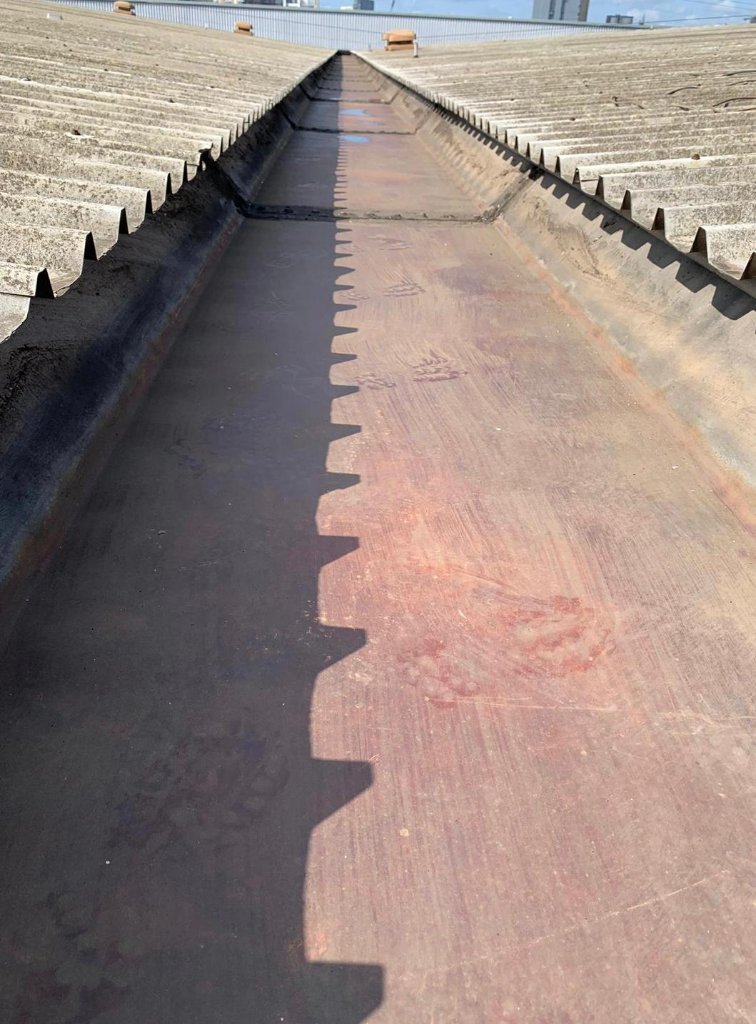
Movement, aged sealants and deterioration at joints can create direct ingress. The joint and surrounding gutter body both need checking before deciding whether a local repair is enough.
Commercial gutter diagnosis · repair · lining
Commercial gutters can leak through joints, corrosion, failed linings, outlets, standing water or the roof interface. We establish the cause and whether the right route is repair, lining, drainage correction or replacement.
Direct answer
A leaking commercial gutter does not automatically need lining. The channel, joints, outlets, falls, existing coatings and adjacent roof details must be checked first. Repair suits local defects; lining suits a retainable gutter; replacement or drainage correction follows structural, geometry or capacity failure.
Failure map
The visible internal stain may be remote from the entry point. The investigation follows the water path and full drainage route.
Movement, aged sealants and deterioration at joints can create direct ingress. The joint and surrounding gutter body both need checking before deciding whether a local repair is enough.
Surface corrosion is different from perforation or loss of section. The remaining integrity changes whether local repair, lining or replacement is realistic.
Peeling, cracking or adhesion loss means the stability and compatibility of what remains must be established before another system is applied.
Debris, restricted outlets or downstream capacity problems can make water back up. Waterproofing cannot solve an uncorrected drainage restriction.
Persistent water may indicate deformation, settlement, inadequate falls or outlet positioning. The cause must be identified before lining is treated as the answer.
Ingress can start where sheets, membranes or upstands meet the channel rather than in the gutter body. These transitions belong in the same investigation.
Condition checks
Corrosion, perforation, deformation and previous repairs determine whether the existing channel can remain.
Joints, stop ends, penetrations and outlets move and fail differently from the main gutter body.
Standing water or overflow may be a drainage or geometry issue rather than waterproofing alone.
Coating stability, contamination and compatibility matter before an additional liquid system is considered.
Sheet edges, membrane upstands and flashings can be the actual entry route and must not be ignored.
Your options
The right option depends on the gutter condition, drainage, access and the result the building needs.
For isolated joints, details or local defects where the surrounding gutter remains serviceable.
Verify: Confirm substrate condition, movement and material compatibility.
For a retainable gutter body where wider waterproofing is justified by measured condition.
Verify: Confirm preparation, adhesion, falls, outlets and complete detail treatment.
For extensive perforation, deformation, inadequate falls or unsuitable drainage capacity.
Verify: Decide whether sections, outlets, supports or the complete channel need repairing or replacing.
Clear answers
Direct answers covering leaks, box gutters, lining suitability, standing water and occupied-building delivery.
Your roof. Your next step.
Send the gutter type, building location, internal leak photographs and any safely available roof images. We will help define the useful next step.