
Early edge blistering
Moisture reaches the exposed cut edge and begins lifting the factory finish; early treatment can limit the spread when the steel remains sound.
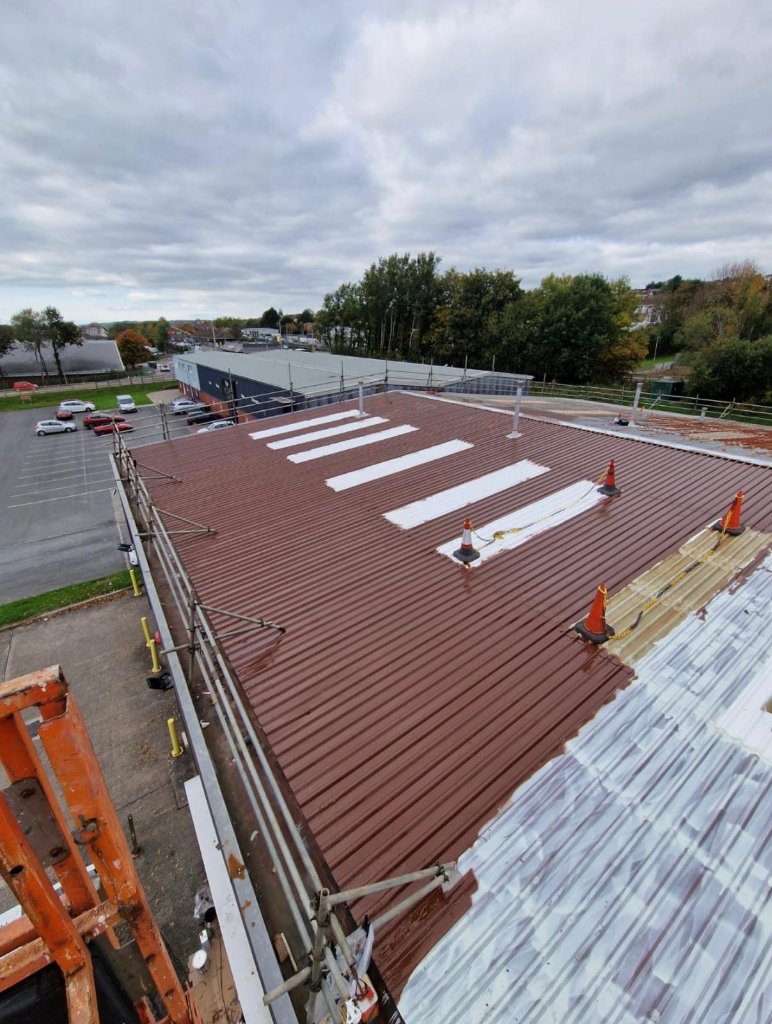
Profiled metal roof failure
A problem-led route from early edge blistering to perforation—showing when preparation and treatment are viable and when sheet work is necessary.
Direct answer
Cut-edge corrosion is treatable where adequate sound steel remains. The real decision is how far corrosion has travelled beneath the coating and whether the sheet edge can still support a durable repair.
Problem → diagnosis → response
Moisture reaches the exposed cut edge and begins lifting the factory finish; early treatment can limit the spread when the steel remains sound.
Visible corrosion may extend beyond the obvious line, so preparation must reach a stable, well-adhered boundary.
Overlapping sheets retain moisture and combine edge deterioration with a waterproofing detail that may also be failing.
Holes and material loss change the work from simple treatment to repair, reinforcement or sheet replacement.
Failure can return where preparation was insufficient, moisture paths remain or the repair system was incompatible.
Standing water, overflow and persistent wetting at eaves can accelerate deterioration and must be addressed with the roof edge.
Repair, refurbish or replace
For early or moderate corrosion where sound steel remains and a specified edge system can bond reliably.
For more developed local deterioration requiring compatible reinforcement or sheet-edge repair before protection.
For advanced perforation, extensive section loss or a remaining substrate unable to support a reliable repair.
Edge treatment alone is unsuitable where perforation or section loss is advanced, the end lap is failing extensively, the sheet is structurally compromised or recurring wetting remains unresolved.
How the work is specified
Clear answers
Technical guidance across the metal roof condition-to-coating lifecycle — corrosion, cut-edge failure, repairability, preparation, protective coating, inspection and cost.
Your roof. Your next step.
Send the postcode, roof type, approximate area, visible defects and wide plus close-up photographs. We will help establish the next technical step.