
Recurring leaks
Water entering at laps, fixings, details, rooflights, gutters or the field membrane.
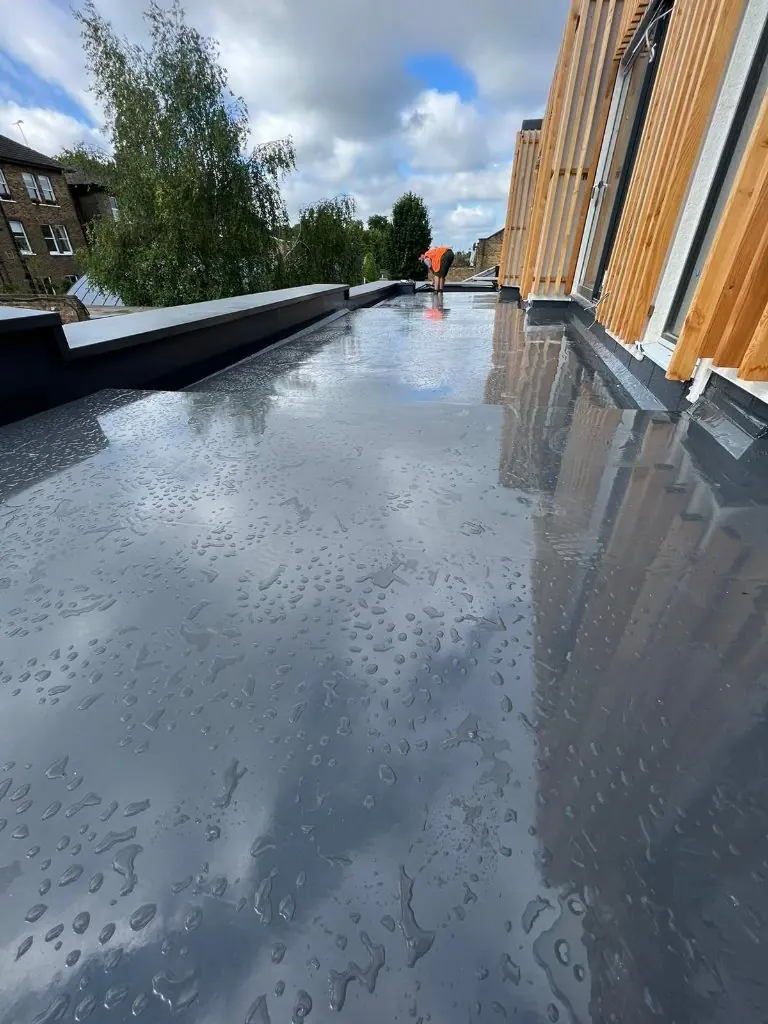
Commercial roof overlays
Large-scale liquid and spray-applied overlays that retain suitable existing roof fabric, rebuild waterproofing continuity and reduce disruptive strip-up.
The commercial case
An overlay is not a shortcut around diagnosis. It is a designed refurbishment route for a roof whose retained substrate, moisture condition, drainage and details have been proven suitable.
When overlay enters the conversation
Water entering at laps, fixings, details, rooflights, gutters or the field membrane.
An existing covering approaching the end of its reliable service window.
Plant, kerbs, outlets and interfaces that make wholesale strip-up disruptive.
Warehousing, production, education or retail space that needs the building kept working.
Overlay systems
Scale + complex profiles
Two-component water-based spray membrane for suitable large roof areas and asbestos-cement encapsulation. Manufacturer-backed warranty routes may be available on qualifying projects, with the applicable terms confirmed in writing.
Rapid specialist application
Highly reactive, solvent-free aromatic pure polyurea for suitable new and refurbishment roofs, delivered with specialist heated plural-component equipment.
Details + controlled phasing
Hand-applied pure-polyurea waterproofing for complex details, transitions and roof zones where spray application is not suitable.
Familiar refurbishment route
Hand- or roller-applied reinforced systems where geometry, detailing density, access or project phasing supports a liquid-applied specification.
The overlay decision
Identify the existing roof, moisture, adhesion, movement and structural constraints.
Separate defects that can be repaired from conditions that make overlay unsuitable.
Test application method, chemistry, detailing, programme, weather and access against the project.
Build laps, fixings, kerbs, outlets, rooflights, edges and gutters into the scope.
Control preparation, weather, membrane build, inspection and handover evidence.
Clear answers
Suitability, technology selection, asbestos and occupied-building delivery
Commercial overlay assessment