
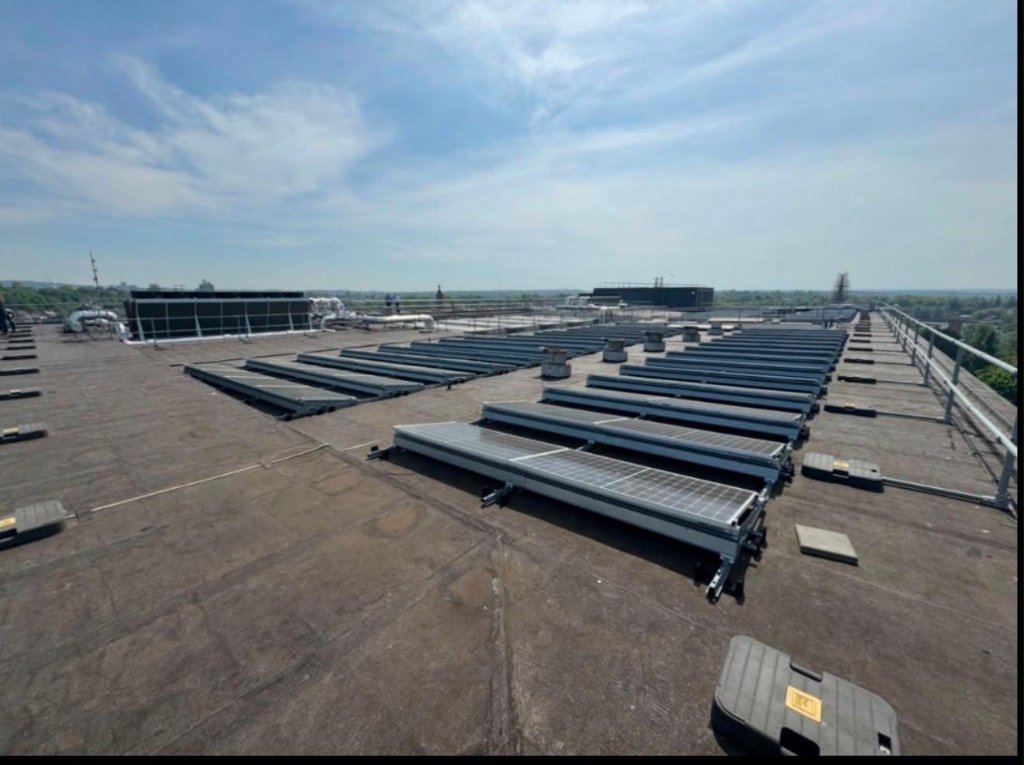
Commercial Waterproofing Technology
Liquid-Applied Roofing for Commercial Roof Refurbishment
Liquid-applied systems can create seamless waterproofing across complex roof details, but performance depends on what they are bonded to and how that substrate is prepared. The roof condition comes before the product choice.
Why liquid systems are useful
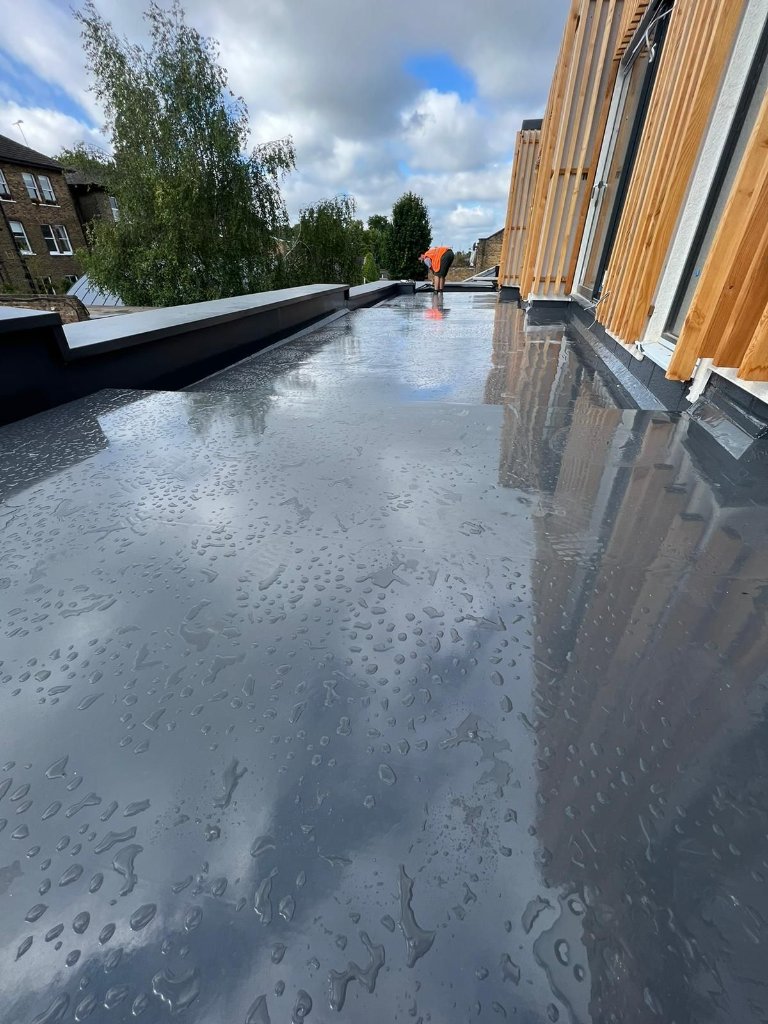
Unlike a prefabricated sheet membrane, a liquid-applied system is formed directly over the prepared roof surface. That can be useful where there are complex details, penetrations and transitions that need continuous waterproofing.
But “seamless” does not remove the need for correct falls, sound substrate, compatible primers, suitable detailing and controlled application conditions.
Do not coat first and investigate later
If moisture is trapped, the existing coating is failing, or the substrate cannot provide the required bond, a new liquid layer can inherit the problem beneath it. Survey and preparation are part of the waterproofing system.
Where It Can Fit
Typical commercial use cases
Complex detailing
Roofs with penetrations, upstands, outlets, awkward transitions and irregular geometry can benefit from a system that is formed in place rather than cut from sheet membrane.
Refurbishment overlays
Some existing roofs can accept a liquid-applied refurbishment system after moisture, adhesion, substrate and preparation requirements have been confirmed.
Localised waterproofing details
Liquid materials can be useful around gutters, penetrations and difficult junctions where system compatibility and preparation are controlled.
Mixed roof geometry
Where a roof changes level, substrate or detail type, a liquid-applied system may offer continuity that is harder to achieve with prefabricated sheets.
What should be confirmed before specification?
The exact system chemistry and build-up should only be chosen once the substrate and project conditions are understood.
Commercial roof survey- Identify the existing membrane, deck or substrate
- Check for retained moisture or saturated areas
- Confirm whether existing coatings are sound and compatible
- Establish cleaning, preparation and primer requirements
- Review drainage, falls, outlets and ponding
- Detail movement joints, penetrations, rooflights and terminations
- Confirm application conditions and cure requirements from the selected manufacturer
- Confirm warranty route only after the final system and preparation are agreed
Liquid, EPDM or spray-applied?
System choice should follow geometry, substrate, scale, access, detailing and application constraints. A roof can also use more than one technology across different zones if the specification requires it.
Liquid-applied roofing questions
What is liquid-applied roofing?
It is a waterproofing system applied in liquid form and cured in place to form a continuous membrane. Different liquid systems use different chemistries, reinforcement methods, primers, application thicknesses and curing conditions.
Can liquid roofing go over an existing roof?
Sometimes. The existing roof must be assessed for moisture, stability, adhesion, contamination, detailing and compatibility. An overlay should not be specified simply because removing the existing system is inconvenient.
Is liquid roofing better than EPDM?
Neither technology is universally better. EPDM can be efficient on suitable roof geometry, while liquid-applied systems can be advantageous on complex detailing and some refurbishment substrates. The building and roof build-up should decide.
Can liquid roofing be applied in bad weather?
Every system has manufacturer-defined application conditions covering temperature, moisture, rain risk and curing. Those limits need to be followed for the actual product being used.
How long does liquid roofing last?
Service life depends on the selected system, substrate, preparation, installed thickness, detailing, exposure and maintenance. Project-specific warranty or service-life statements should be tied to the final manufacturer specification.
Can liquid systems be used on occupied buildings?
Sometimes, but programme, odour, access, cure, ventilation, exclusion zones and operational constraints are all system- and site-specific. Occupancy should be planned into the works rather than assumed to be unaffected.
Your roof. Your next step.
Considering a liquid roof system?
Send the existing roof type, photographs, location and the problem you are trying to solve. We can work out whether liquid-applied waterproofing is a sensible route to assess further.