
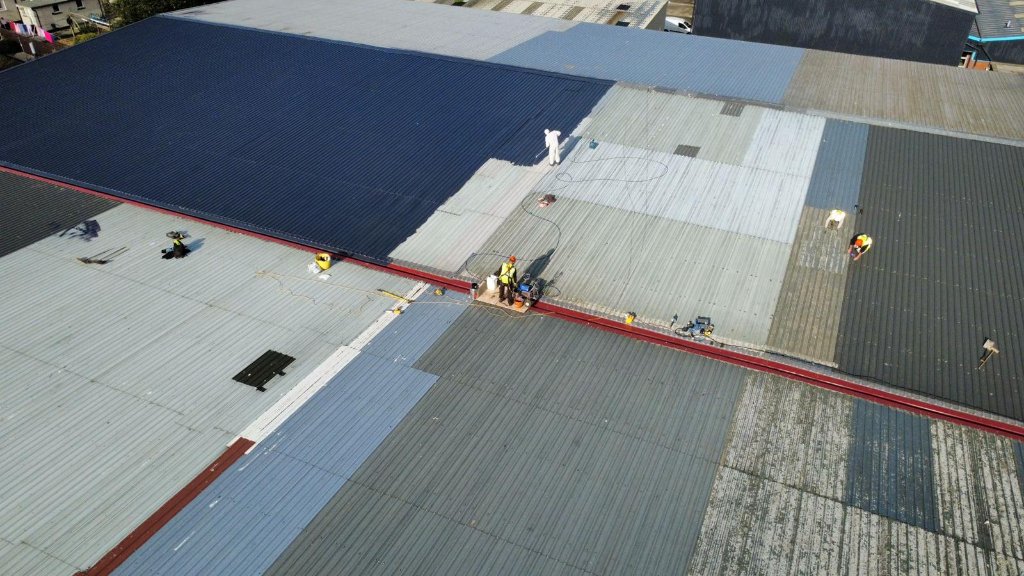
Asbestos Roof Coating
A coating option for asbestos-cement roofs that remain suitable for in-place management. The substrate, preparation method, work classification and selected system are established before any coating specification is issued.
Asbestos Roof Coating — Technical Fact Block
Survey-confirmed values — specification depends on substrate condition
- Coating type
- Encapsulation coating selected for the assessed asbestos-cement substrate
- Primary purpose
- Seal and protect a suitable asbestos-cement surface as part of in-place management
- Substrate assessment
- Required before specification — sheet condition, structural integrity and fibre release inspected
- Surface preparation
- Biological growth treatment, loose material removal, surface cleaned to receive primer
- What coating cannot do
- Restore lost sheet integrity; damaged areas require a separately assessed response
- Warranty & service life
- Confirmed at specification stage against the survey findings and system selected
- Management status
- The asbestos remains in place, recorded and subject to ongoing inspection
What an asbestos roof coating is — and what it is not
An asbestos roof coating is an encapsulation system — engineered to seal and protect a suitable asbestos-cement surface as part of a documented management approach. It is not a substitute for assessment. Compatibility, controlled preparation, application requirements and future inspection all form part of the specification; an unsuitable coating or unstable substrate can lead to adhesion and performance failure.
For the full encapsulation process — including when coating is appropriate and when removal is instead required — see the asbestos roof encapsulation hub. This page details the coating system itself.
Typical functions within an encapsulation coating system
Primer or Sealer
Where required by the selected system, a compatible primer or sealer prepares the assessed surface for the following coats. Product choice and application follow the substrate condition and manufacturer requirements.
Protective Build Coats
The selected system may include one or more build coats or reinforcement at defined details. The specification states the build-up, coverage and any local repairs required before coating.
Finish or Topcoat
Where included, the finish coat provides the specified weathering and appearance. Product, colour, coverage and application conditions are confirmed for the project rather than assumed from a generic build-up.
No coating performs over unprepared substrate
Coating performance depends on whether the assessed surface can accept the proposed system. Biological growth, contamination, moisture and unstable material can affect adhesion, while preparation methods must be controlled to avoid unnecessary fibre release.
Our preparation stage is specified, not improvised: biological growth is treated and removed; loose and friable surface material is addressed; the surface is cleaned to receive primer; the sheet is dry. Preparation is not a place to cut cost — it is where the service life of the system is decided.
What an asbestos roof coating cannot do
An encapsulation coating is a management response for sheets that are surface-weathered but structurally sound. It is not a response for sheets that are fractured, delaminated or structurally failed — coating those simply seals in a failing substrate, and the system fails with it.
Forti Nova will not coat a substrate that cannot support the system. Where the survey identifies loss of integrity, the response may involve controlled repair, local sheet replacement, overcladding or removal. The correct route and work category depend on the material, its condition and the proposed activity.
Asbestos Roof EncapsulationAsbestos roof coating — Frequently Asked Questions
The system, the preparation, the limitations
Related asbestos roof resources
Technical guidance across the full asbestos-cement roof management lifecycle — diagnosis, repair, encapsulation, refurbishment, waterproofing and replacement decisions.