
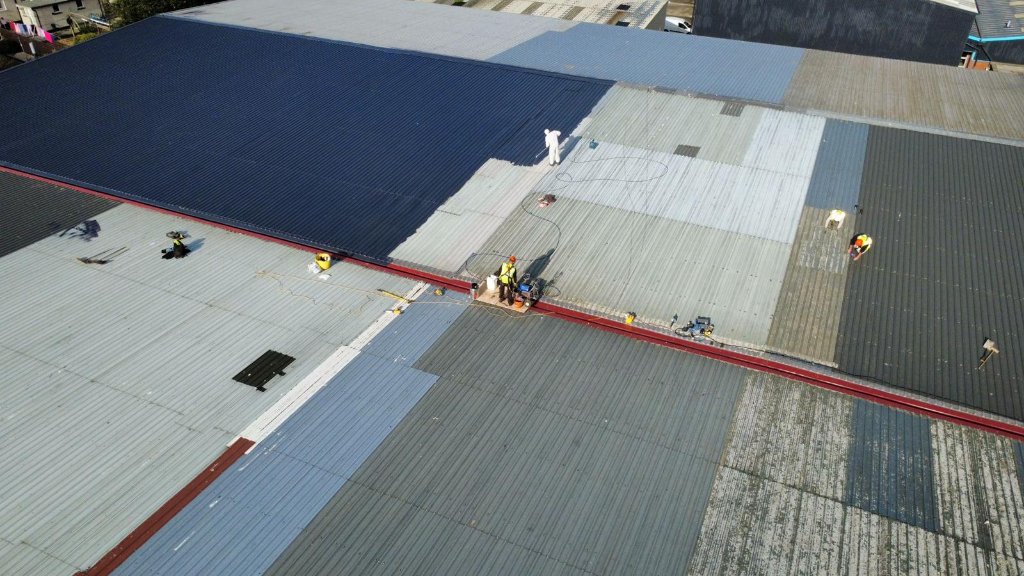
Recurring Roof Leak Problem
Why Commercial Roof Repairs Keep Failing
A failed patch does not automatically mean bad workmanship or that the whole roof needs replacing. It means the diagnosis, substrate, repair method or wider roof condition needs another look.
First prove where the water is entering
Internal water presentation can be misleading. Water may enter at a lap, flashing, penetration, gutter or rooflight and travel within the roof build-up before appearing elsewhere inside the building.
That is why a repeated patch directly above the same ceiling stain can fail even when the patch itself is well applied.
Do not use arbitrary rules
There is no honest rule that “two repairs means refurbish” or that a fixed percentage of leaks come from one detail type. Repair history is evidence, not a substitute for diagnosis.
Common Failure Mechanisms
Why a repair can fail even when the patch looks fine
The visible stain is not the entry point
Water can travel through insulation, deck profiles, joints or structural channels before it becomes visible inside. Repairing directly above the stain can miss the actual defect.
The repair treated a symptom, not the cause
A failed seal, crack or patch may be the result of movement, drainage, corrosion or a wider substrate problem. If the cause remains, the repair can fail again.
The repair material was incompatible
Different membranes, coatings and sealants need compatible primers, preparation and repair products. A material that sticks initially can still be the wrong choice for the existing roof.
The substrate was wet, weak or contaminated
Repairs depend on the surface below them. Moisture, loose coating, biological contamination, corrosion or unstable substrate can prevent a durable bond.
The failure is wider than one defect
Several leaks, repeated failures or deterioration across multiple details can indicate that the roof condition has moved beyond isolated maintenance.
Drainage or movement was ignored
Standing water, thermal movement, settlement or flexing can keep stressing the same detail. A patch does not correct the underlying movement or drainage path.
Is a wider repair needed?
Use the condition evidence to decide what comes next
Localised repair may still make sense
One identifiable defect, surrounding roof in serviceable condition, compatible repair method available and no evidence of wider moisture or substrate failure.
A wider condition survey becomes more useful
Leaks recur in different places, several repairs have already failed, moisture is suspected within the build-up, or several details are deteriorating together.
Refurbishment may be considered
The main roof can support a new system but the waterproofing has deteriorated beyond isolated repair. Substrate, drainage and compatibility still need confirming.
Replacement may need to be considered
The substrate or structure is unsuitable for overlay, moisture cannot be managed within the existing build-up, or damaged components require removal rather than coating or repair.
Recurring roof repair questions
Why does my commercial roof keep leaking after repairs?
Recurring leakage can mean the wrong entry point was repaired, the repair material was incompatible, the substrate was unsuitable, or the roof has several failure points rather than one isolated defect. A wider inspection is usually more useful than guessing at another patch.
How many repairs should I try before refurbishing?
There is no universal number. One failed repair may simply have missed the defect; several successful local repairs can also be perfectly reasonable on an otherwise sound roof. The decision should be based on roof condition, defect pattern, moisture and repair history rather than a fixed count.
Does repeated leaking mean the whole roof needs replacing?
No. Repeated leaks can still be caused by details, gutters, rooflights or a particular roof zone. Replacement should only enter the decision when the wider roof build-up or structure makes repair or refurbishment unsuitable.
Can a roof be refurbished over old repairs?
Potentially. Existing repairs have to be assessed for adhesion, compatibility and stability. Some can remain within the prepared substrate; others need removal or local correction before a new system is applied.
What information helps diagnose recurring leaks?
Internal leak locations, when the leak occurs, photographs after rainfall, previous repair records, roof type, known drainage issues and any survey or moisture information all help narrow the cause.
What is the next step if a leak is urgent?
Deal with immediate risk first, especially around electrics, stock or occupied areas. Temporary containment can be appropriate while the source of the leak is investigated and a permanent repair is planned.
Your roof. Your next step.
Same leak keeps coming back?
Send the repair history, internal leak locations and roof photographs. The useful next step is to understand the pattern before spending on another patch.